Prescribing medications can be a fallback position for some physicians and, too often, there’s a failure to conduct an ongoing assessment of the need for, and effectiveness of, the medication. This is particularly true for older adults. Three of the most commonly over prescribed and overused drugs are: Benzodiazepines (including Valium, Xanax and Ativan) and the related drugs Ambien and Lunesta; antibiotics; and aspirin, yes, aspirin. Read more at the NYT link below.
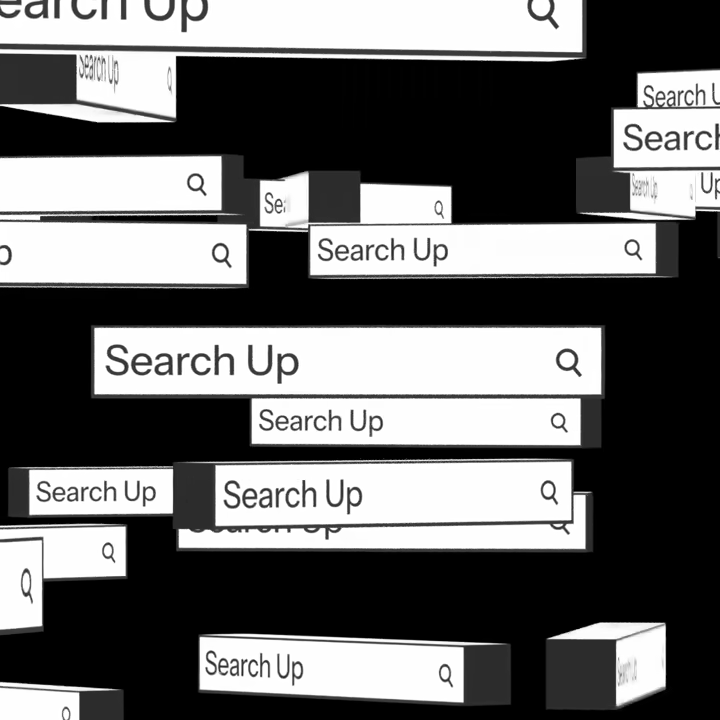
Well, get over it! While younger generations may still use Google when they talk about finding information online, their preferred term is “search it up.” Why? Their search strategy is platform-agnostic, meaning they engage across various social media apps and online channels. For more on this term, read the NYT article below. And if you’re interested in learning additional current slang, search up “ate,” “chopped,” “sigma,” and “canon event.”
Each month, we come across thoughtful articles, compelling research, inspiring stories, and practical resources that deepen our understanding of aging well. Some we share on social media. Others are recommended by members of the Geritas community. All are worth passing along.
From reprogramming human cells to addressing societal ageism, TIME’s 2026 “Longevity Leaders” are leading the way to longer, healthier lives. Read about these 12 dynamic innovators at the link below.
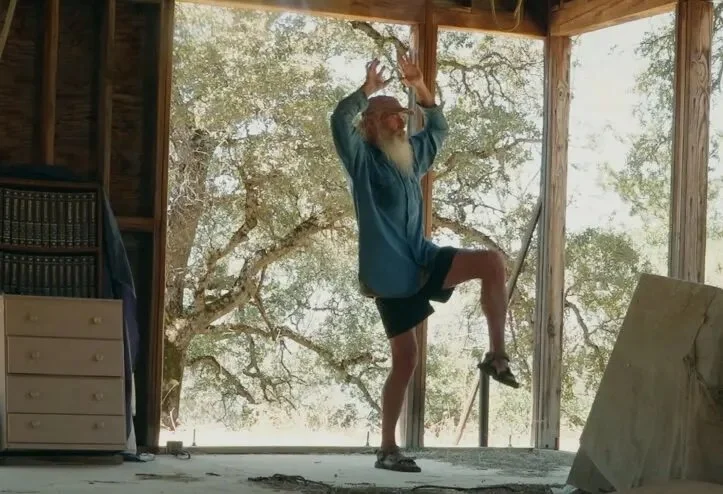
Robb Moss's documentary The Bend in the River follows five former Colorado River guides now in their 70s, revisiting people he filmed in their 20s and again in middle age. By blending decades-old footage with present-day interviews, the film explores how aging reshapes identity, relationships, and perspectives on life.
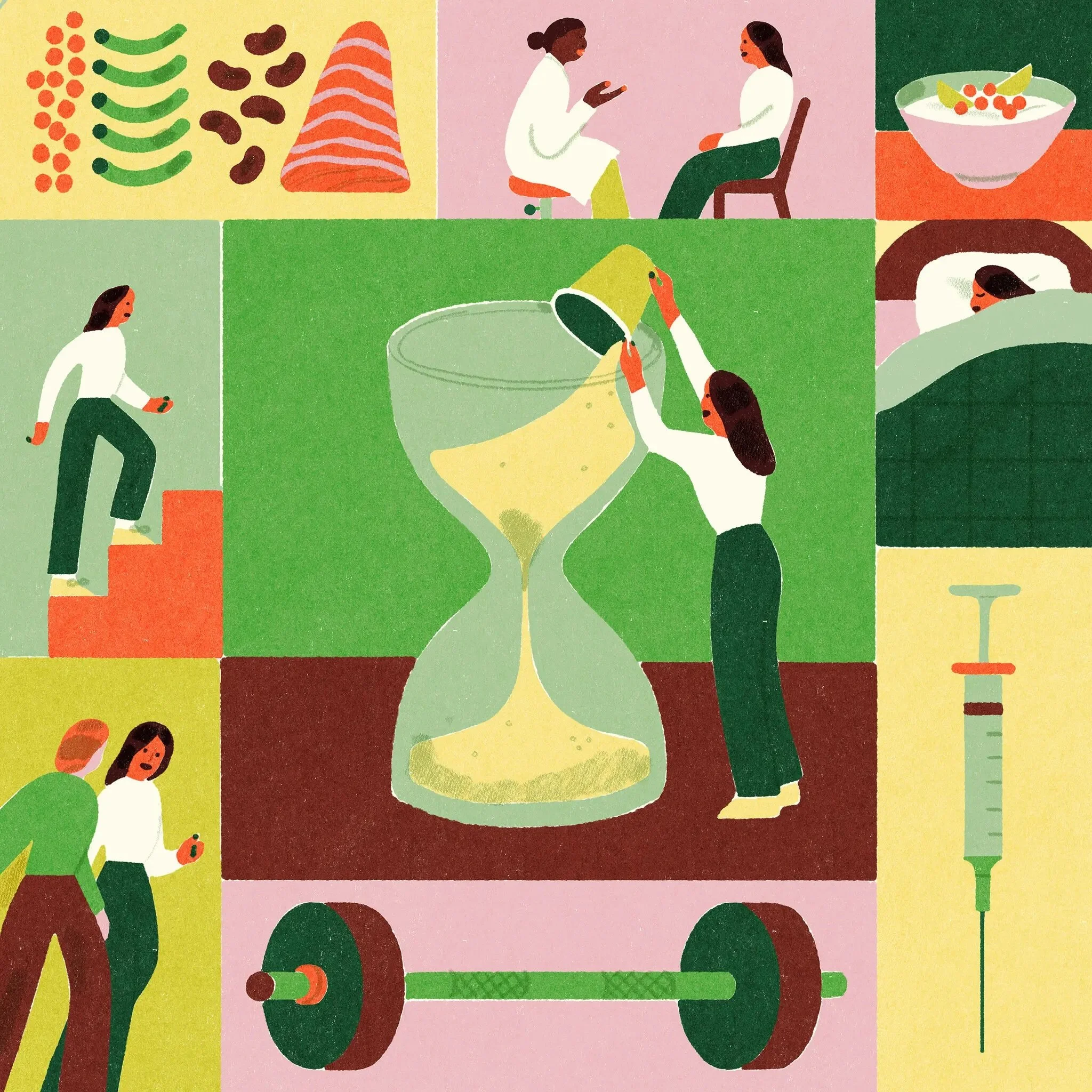
Experts share nine things to do in midlife (roughly defined as ages 40 - 60) to increase lifespan and health span. These include: maintain and expand personal relationships (social interaction is a critical wellness intervention); eat fermented foods to help control inflammation—a major contributor to many age-related illnesses; and get the shingles vaccine, which has the added benefit of protecting against dementia. See the full list at the link provided below.
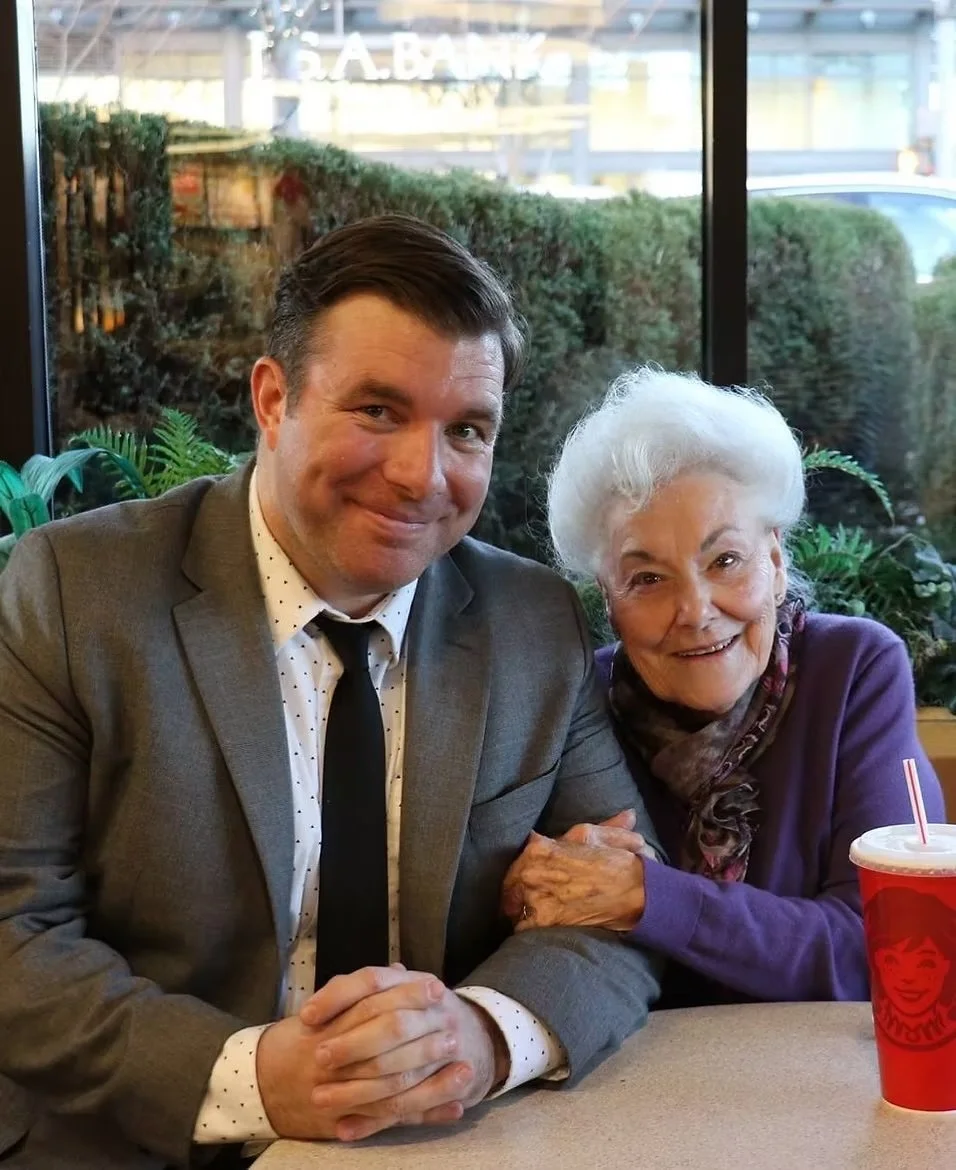
The Grandma Stand, a charming purple booth, pops up in various locations throughout New York City. Staffed by wise and welcoming grandmas, this mobile stand offers passersby an opportunity for conversation, connection, and comfort. Watch a heartwarming segment on the Today show, where volunteer grandmas share their sidewalk counsel with the community.
Each month, we come across thoughtful articles, compelling research, inspiring stories, and practical resources that deepen our understanding of aging well. Some we share on social media. Others are recommended by members of the Geritas community. All are worth passing along.
Beginning this month, we're bringing them together in one place.
The senior-living industry, already grappling with a severe staffing shortage, is facing further challenges due to the current administration’s draconian immigration policies. Millions of immigrants—both eligible and undocumented workers—fill essential elder-care roles in the U.S. As they are forced out of these critical care positions—particularly as the population of Americans 65 years of age and older continues to expand—the crisis will only escalate.
Developing dementia is one of the greatest fears of growing older. Having advance healthcare directives, a healthcare proxy, and documenting end-of-life wishes should be standard practice for every adult.
However, traditional advance directives may not be enough. Dementia directives—while not legally binding—can provide additional guidance about a person's preferences at different stages of the disease. This can help families and caregivers navigate extraordinarily difficult decisions with greater clarity and confidence.
Follow the link below to read the WSJ article on what dementia directives are, why they matter, and to access free online templates.
Elite athlete, former attorney, and mother of two, Diana Fitzpatrick, 68, brings rigor, empathy, and intelligence to everything she does. Her accomplishments are extensive: a three-time Olympic Marathon Trials qualifier (with a personal best of 2:37:32), an age-group record holder at the Western States 100-Mile Endurance Run (set at age 60), and a two-time winner of the famed Dipsea Race, among many other honors and achievements.
A priority for Diana is giving back to the running community. As the first female president of the Western States Endurance Run Foundation, she helmed a number of groundbreaking policies around diversity and inclusion. She also coaches the San Quentin Rehabilitation Center’s 1000 Mile Club, featured in the acclaimed documentary 26.2 to Life.
Originally a Shinto purification ritual, the concept of misogi (pronounced mee-soh-gee) has evolved in modern times to mean an intense physical or mental challenge designed to test limits and inspire inner strength.
If you decide to pursue a misogi, here are some ideas to inspire your personal and year-defining quest.
A transplant to NYC by way of London, Davor is a teaching artist with a colorful background of moving fluidly between stage and classroom. And though he doesn’t own up to it in his bio, he’s a walking encyclopedia of show tunes and factoids for any musical that has hit the Broadway stage.
From her upbringing in rural Connecticut, to the executive hallways of NY and LA, and now back to bucolic environs, Jenness Brewer’s latest act is the culmination of all that came before. She brings her love of land, art, fellowship, and family together in beautiful and unexpected ways.
June Squibb, 95, knows how to play to her age–and defy it. Last week, I saw a screening of her new movie Eleanor the Great, directed by Scarlett Johansson. Squibb plays Eleanor, a 94-year-old woman living in Florida, who loses her best friend and is then pressured into moving back to New York City to live with her daughter, played by Jessica Hecht.
As she wrestles with the dueling factors of being treated like an incapable old woman by her daughter while still, as she puts it, feeling like the same person she’s always been, she stumbles on an unconventional way to memorialize her dear friend, which stirs up a bit of trouble.
Along the way, the movie shines a light on the beauty and mutual benefits of intergenerational friendships.
Squibb, who has no plans to retire, (you might remember her from the movie Thelma in 2024) will also be hitting the stage on Broadway in December, starring alongside Cynthia Nixon in Marjorie Prime. Learn more about Squibb’s career at E!News.
“This seems less like a twilight thing and more like a ‘go girl, kick ass’ thing—which is good because I’m not done.” Jane Fonda, longtime aging well champion, at age 87, strongly declaring she still has plenty to do, upon accepting the Life Achievement Award at the 31st Annual SAG Awards on Sunday night.
Fonda also noted she did one of her most successful movies in her 80s and predicted she’ll be doing her own stunts in action movies when she’s in her 90s.
Her fiery and inspiring speech challenged the status quo. As the New York Times quoted Fonda, “...We are in our documentary moment. This is it. And it’s not a rehearsal.”
Blondie frontperson Debbie Harry, the iconic rock and roller of the 1970s and 80s (and beyond) doesn’t seem too different these days from the person she was back then: bold, brash, and full of vitality. She is currently the focus of Gucci’s Cruise 2025 collection, which was shot by photographer Nan Goldin for the We Will Always Have London campaign. To catch up on more of what she’s up to, follow the link below to The Times.
While the music industry may skew young, there’s one sector of the profession that’s a surprising exception. Many of the industry’s most valued roadies, including equipment and sound technicians, are well into their golden years (despite the long hours and physical demands.) Read about how some of music’s most legendary artists depend on these experienced employees to keep them rocking and rolling all night.
More than a third of the awards given out at the Golden Globes on Sunday, January 5, went to individuals over the age of 50.
The oldest to bring home an award: Jean Smart, 73, known as the sassy and savvy Deborah Vance in Hacks, won for Best Actress in a TV Series, Musical or Comedy.
Demi Moore, 62, who spoke of the double challenge of aging as female, won for Best Actress, Motion Picture, Musical or Comedy, for her role in The Substance. In her acceptance speech, Moore talked of having been “doing this” for more than 45 years without winning anything. She also talked about a producer telling her 30 years ago that she was “a popcorn actress,” a comment that she says corroded her over time, leading to a crisis in confidence that nearly convinced her to put herself out to pasture a few years ago. Until a certain script found her. Follow the link below to hear her acceptance speech.
Former President Jimmy Carter, who died on December 29th, was 100 years old–a milestone age not achieved by just anyone. To look at the lynchpins of his long and active life, Fortune spotlights Carter’s three strategies for longevity. Read on to see how fitness, love, and community factored in.
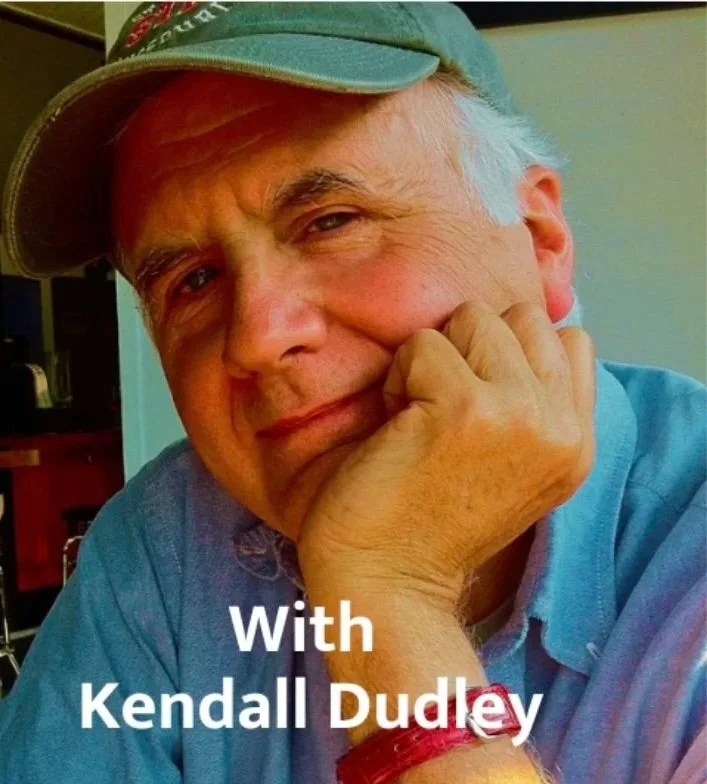
Join the Encore network for its webinar, “The Lure of Writing and its Link to Healthy Aging,” on September 23rd from 12-1 PM ET, led by teacher-writer Kendall Dudley. Scientific evidence demonstrates that writing can enhance mental sharpness, improve memory, and alleviate stress. The instructor suggests a couple of prompts to experiment with prior to the event: “Turn a face you saw yesterday into three lines of text. Or linger on the sound of rain, listen to what it says, and then write it down.” Follow the link below for more information and to register for the event.
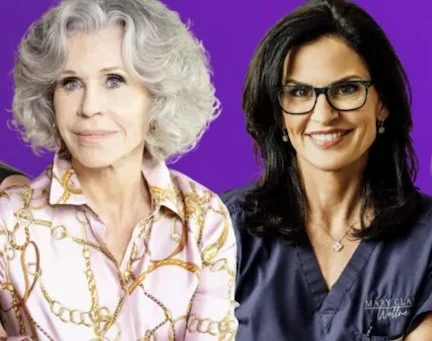
The Livelong Women’s Health Summit will take place in NYC, September 25-26, 2026. Featuring guest speakers Jane Fonda, Bobbi Brown, and Dr. Mary Claire Haver, the two-day agenda includes sessions on hormones, longevity, brain health, mobility, strength, connection, and joy. For more information and tickets, follow the link below.
Join the Buck Institute–in person or via Zoom–on May 6 at 11am PT for the seminar, “Scientific Wellness to Unlock Longer, Healthier Lives.” Through big data, AI, and other advanced tools, Dr. Nathan Price is developing tailored strategies to support individual longevity. Follow the link below to register for the event.
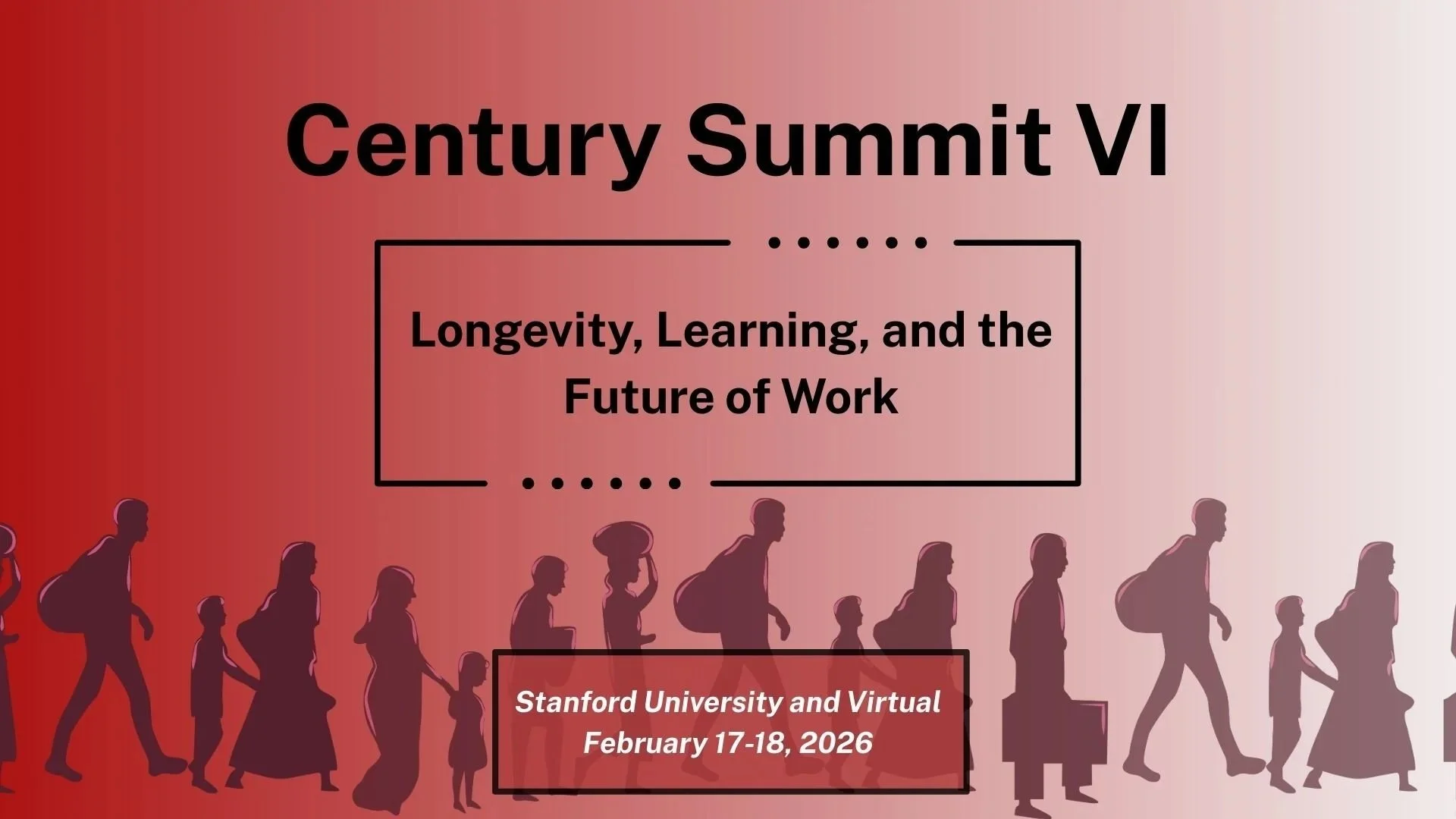
The sixth annual Century Summit will be held February 17 & 18, 2026 at Stanford University and online (the virtual platform is free for all participants). This year’s program will focus on how to develop and support professionals across extended career journeys as we live longer and healthier lives. One key question to be addressed: How can we ensure that opportunity is not limited by age? Follow the link below to find out more.
Join Dr. Ezekiel Emanuel, author of the newly released book, “Eat Your Ice Cream: Six Simple Rules for a Long and Healthy Life,” for an honest and refreshing discussion on what really matters for living better and longer. The conversation will take place, January 7th @ 7:30pm ET, in person at the 92nd Street Y, New York, and online. Follow the link below for more information and to register.
The 4th annual Longevity Summit, “The Future of Medicine: Eliminating Diseases of Aging,” is taking place December 9-10 at the Buck Institute for Research on Aging in Novato, CA. Speakers will be sharing advancements in the longevity field, with representatives from biotech companies, hospitals, investment firms, and academic institutions. The program is both in-person and online. Learn more and register by following the link below.
Join Mount Sinai medical experts for an online conversation on “Protocols for Living Better, Not Just Longer: The Science Behind Longevity and Healthspan.” Part of 92NY’s Spark Your Health Talk Series, the program will take place November 5th at 7pm ET. Read more about the virtual event and register by following the link below.
Join the American Society on Aging for a conversation with Kristin Dahlquist, DSW, MPH and Lakelyn Eichenberger, PhD on planning for the costs of long-term care. This is particularly important as proposed cuts in Medicaid funding could place a significant financial burden on states and individuals. Sign up below for the free webinar on October 1.
Tomorrow! Join the Stanford Center on Longevity for “A Conversation with Kerry Burnight,” author of “Joyspan. The Art and Science of Thriving in Life’s Second Half.” The webinar will take place August 12, 2025 at 12:00 PM Pacific Time. Register through the link below.
Become a Citizen Archivist! If you’re of a generation that can read cursive (a vanishing skill as penmanship is no longer taught in many schools), the National Archives Catalog needs your help. Millions of documents written in longhand—ranging from JFK assassination records to case files on UFO sightings—need to be transcribed and tagged. Learn more, and how to get started at the link below.